

I suppose it’s unlikely I’ll ever see him again. There was an air of dignity around him, sitting as he did each afternoon along Stefania Street back to the sun, almost always with a book in his hand. As I passed him on my daily bike ride home from school, his stare was inevitably downward, toward his book, or lost in thought. Going by, I’ve come to call out “Istvan,” — no doubt an interruption, and he looks up and offers something of a smile.
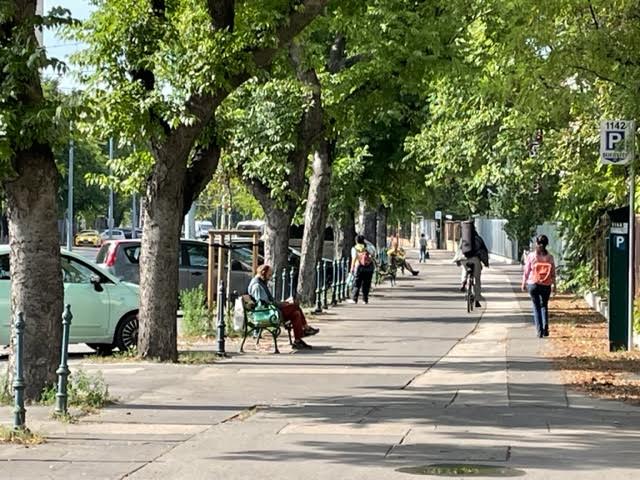
For months I had hoped to head to his bench with a student in tow to help me interview him. But one thing led to another. The students I had in mind were busy preparing to graduate. My focus shifted to my own departure from Hungary. But one day in early Spring, I stopped and using my phone’s translation app, asked him his name. “Istvan,” he responded. I smiled back, and said my name was also Istvan, “Steven” in Hungarian.
What, I wondered, was his story? Was he homeless? What were his struggles, his demons? What brought him to this bench on this street?
I’ve come to accept that these questions will go unanswered. And why not? As my time in Budapest drew to a close, I realized Istvan was a metaphor for my relationship with this place — the unasked and unanswered questions, the insights that resided just around the next corner, the cultural explanations that only make sense when one fully commits to a place over time. Istvan, it seems, is the Hungary I will never come to know.
 American in Budapest
2 responses to “Istvan”
Steven – I truly enjoyed reading your posts about your time in Hungary with Marsha. I am curious about how the people there feel about the government. You touched on it in your last post. Is the population OK with the leadership or are they frustrated by this illiberal democracy? I hope you keep writing about your travels as well as your home.
LikeLike
Hi Joy, so nice to hear from you…As an expat our contact was generally with well-educated and career-minded Hungarians. I’d say they were generally, but certainly not always, quietly, but openly critical of Orban. He hires friends en mass (like Putin is reputed to do) and operates like a Mafia boss–like Trump. He is smarter than Trump, but like Trump, an observer can question his genuine patriotism for Hungary, rather than simply being on a quest for more wealth and power.
LikeLike